PART 3 (Of 5)
The "I Didn't Connect" Conspiracy (Part 1)
HERE'S WHAT WE KNOW
1. Pretty prose and perfect pacing isn't what creates obsession. Otherwise everyone's favorite book would be The Iliad
2. Craft and Story are very different things—the former gets you respect, the latter gets you representation
3. Craft isn't only preventing you from creating connection, it's actually sabotaging it
Cut back to me, on my couch, sobbing hot, frustrated tears after receiving the R&R. I thought back to all those days sitting with senior agents at Sterling behind their desk, as they walked me through their process.
When describing why they were offering never once had they mentioned “perfect pacing” or “zero plot conveniences” as the reason why.
Not that those things don’t matter, but they’re not what makes agents move.
So I went back to the drawing board.
Studied the notebooks full of observations I had squirreled away while working in traditional publishing.
Analyzed dozens of my favorite traditionally published novels.
Literally scribbled notes on a giant posterboard like I was a journalist cracking a cold case.
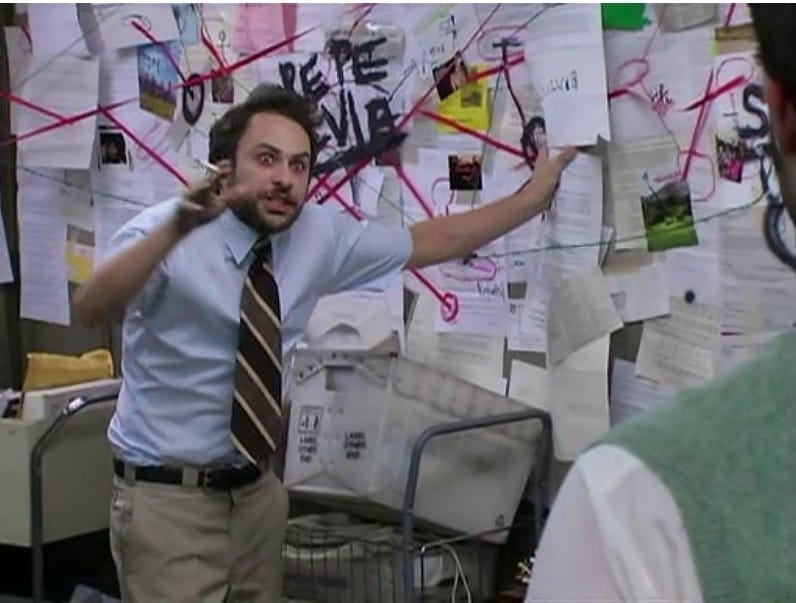
Slowly, a pattern started to form.
The very craft techniques I had been taught would boost my querying odds were actually sabotaging my chances.
Because if connection is the key to full requests…
The combination of line editing, polishing and prose rules we call ‘craft’ is behind the invisible full request killer…
The Invisible Full Request Killer
It comes down to the #1 reason literary agents reject brilliant manuscripts: a little something called Narrative Distance.
Even if you’ve never heard this term, I guarantee you’ve experienced it.
It’s that sense of prose falling flat. That feeling of being outside the manuscript rather than sucked in. That nagging thing that keeps you aware that you’re consuming a story rather than disappearing into it.
And therefore, you feel nothing while reading it.
Remember, this is an industry run based on the feels.
The underlying dynamic responsible for this distance?
A sense that you’re watching or reading a story from the outside, rather than feeling like you’re in the story, experiencing everything firsthand.
Let me give you an example:
“Sarah was anxious. She thought about all the things that could go wrong. She knew she should stay calm. She needed to stay calm."
We can make the prose prettier, more evocative:
“Sarah’s shoulders tightened. She felt overwrought and anxious, thinking about all the things that could go sideways. She knew she should stay calm, take a few breaths. She needed to stay calm.”
…Better, but still, it falls a bit flat. You are aware you’re reading about a Sarah who is worried. You don’t feel like you are sucked into the scene.
Compare that to this:
"Her hands were shaking. So many things that could go wrong, she could see it all behind her closed eyes every time she blinked—her rambling pitch, the pointed questions, the awkward silence after. Stay calm. God, she needed to stay calm. Was she breathing? She wasn't breathing."
Feel the difference?
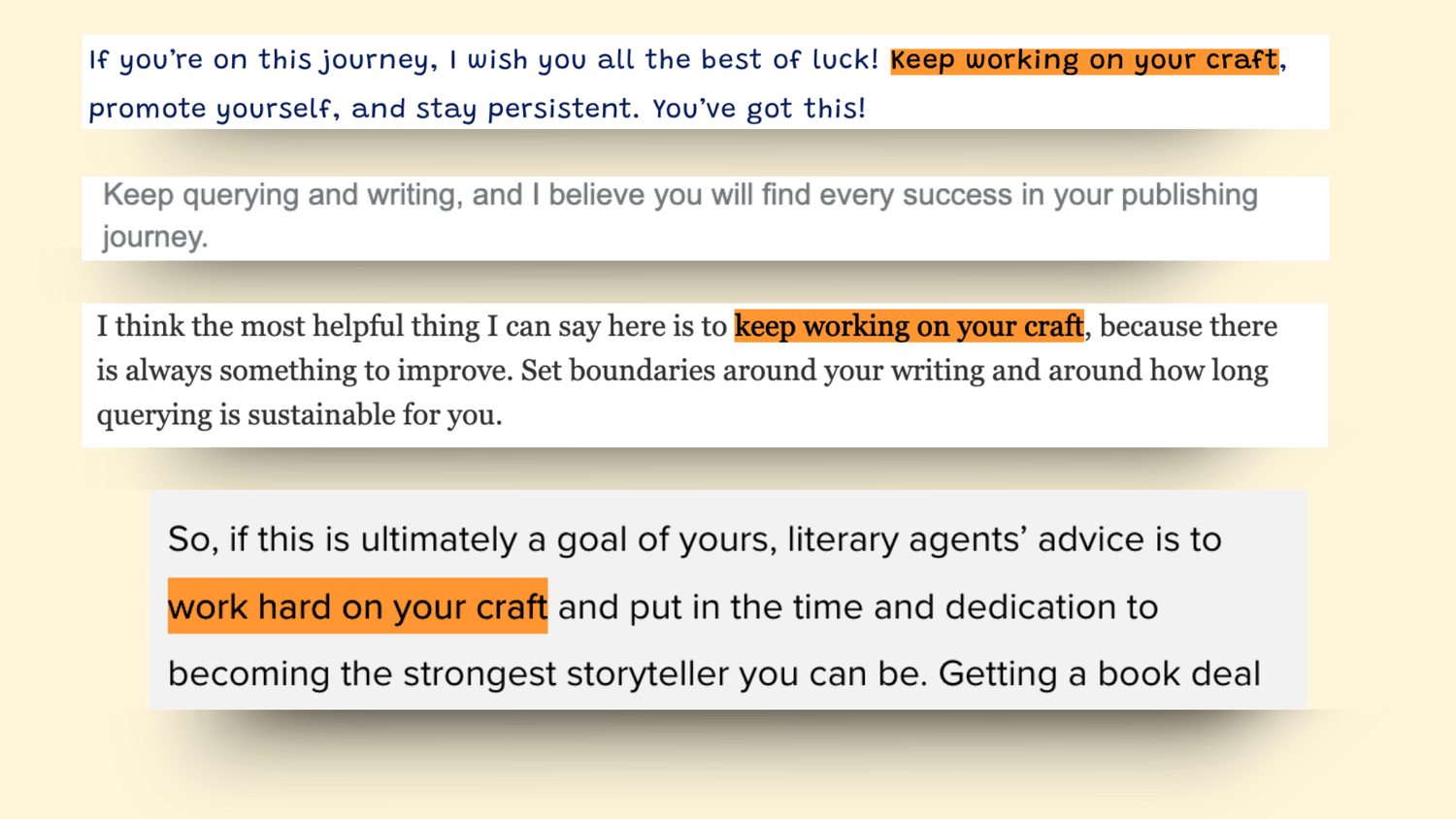
Craft based revising— increases Narrative Distance. Because picking stronger adverbs, more evocative descriptions, all of this is carefully controlled buffing, oriented around choosing words that invoke admiration rather than embodiment.
Polish over presence.
The result: you’ll have pretty words that impress agents and acquisitions teams, but it won’t possess them.
This is the reason why your beta readers, writing workshops, craft books and developmental editors have left you no closer to that coveted offer of representation.
They’re all based on helping you better your craft—with a focus on prose and plot— rather than fixating on the only thing that matters…
What is the only thing, you ask?
Nothing drilled home for me exactly what sparks connection to a story like watching Christopher Nolan’s TENET.
The combination of Christopher Nolan and John David Washington (who I had loved in Black KKKlansman) should have been movie of the year for me.
The CGI was amazing and cutting edge. The action scenes were inventive with excellent fight choreography. The stakes were sky high and the premise was extremely “high-concept” and hook-y.
And yet.
There was 0 characterization. John David Washington’s character wasn’t even given a name, just called The Protagonist, and had no backstory, no meaningful relationships, no personality.
And even with the past, present and future at stake as the bad guy stole dangerous top-secret technology….
I yawned, leaned back into the couch, blindly grappled for my phone and started playing Candy Crush.
When I next looked up, the credits were rolling.
And this, my friend, is what agents are doing to your manuscript.
You don’t have the luxury of assuming otherwise.
This is what ‘I didn’t connect’ really means…
Not the premise — they requested the full, so the premise already worked.
Not the plot — they read the synopsis, plot was never the question at the full request stage.
Not the theme–or your query would have been ghosted.
Nine times out of ten, agents say this when they didn’t connect to the character.
Think about your most obsessive reads — were you obsessed with the plot mechanics, the pinch point on page 67, or with the person at the center of it? It's always the person.
The protagonist is your window into the story, the person through whose eyes, ears, and mind you’re experiencing the events of the plot.
This is why all great and/or successful stories are character-driven.
Yes, even, and especially stories like Fourth Wing or 50 Shades of Gray, despite their haters.
Because, and I will emphasize this again–craft and Story are two different, exclusive and distinct things.
And every NYT Bestseller gets that way because they’ve hit the nail on the head with the latter.
They connect with people–hundreds of millions in some cases—spike their emotions, and have them turning pages late into the night, feeling the weight, the tension, the fear or the lust of the protagonist in their bones.
If we don’t connect to the protagonist, we surely aren’t going to give a single shit about what happens to them.
The plot ceases to matter.
Going all in on character is not a nice-to-have for diverse authors.
It is absolutely, fundamentally, utterly necessary to not just understand how this works, but what creates (and gets in the way of) that character connection.
Because we’re operating at a deficit non-diverse authors never experience.
The harsh truth is: literary agents are going to inherently have a harder time connecting to our characters.
Meaning, even if all were equal, they will feel more Narrative Distance reading your novel, than a non-diverse author.
The question is, of course, why?
And the answer will shed an angels-singing, mind-boggling, clarity-inducing light on why you’ve been trapped in query purgatory, and more importantly, how to escape…
SUBTEXT
1. Narrative Distance is the difference between watching a scene play out from a distance, and being there
2. Narrative Distance is always a deficit of character. Plot is only relevant, it only matters, it's only effective, dependent upon our relationship with the character. If your full requests are getting rejected, you have a character problem above all else.
3. Remember, love covers a multitude of faults. Get character right, and every other flaw will be forgiven. Get it wrong, and nothing else you do matters
4. As diverse authors agents will automatically struggle to connect to our characters—no matter how masterful the writing (we'll dive deeper on why and how to overcome this in the next couple pages)
Want to keep reading?
This next part is proprietary intellectual property. Which is a fancy way of saying it's my top-secret, mind-blowing brain baby, and I only want it in the right hands. If what you've read so far has resonated with you, put in your name and email below and I'll email you the rest of the series.
We HATE spam. Your email address is 100% secure and I will literally only email you to give you more cool shit like this article series. Unsubscribe anytime. I won't cry (maybe a little).