PART 2 (Of 5)
Death By A Thousand Edits
HERE'S WHAT WE KNOW
1. What literary agents say and what literary agents do are very different things
2. Since we as diverse authors will never be the logical choice, we have to appeal to an agent's subconscious, rather than conscious, brain
3. The question becomes, how can we hijack an agent's brain with our prose, and why hasn't working on your craft been enough to do so?
One of the most important things you can realize for your querying journey is that agents aren’t grading your story like your 8th grade English teacher.
I realized this as I sat in stunned silence, a couple tears I had tried to hold back silently streaming down my cheek as the final full rejection to my YA epic fantasy came in.
When I first queried my North African inspired YA Fantasy novel after leaving the publishing industry, I was told by a former acquisitions editor at a Big 5 imprint that she would be shocked if I wasn’t repped within 90 days. My developmental editor, who had also worked at major literary agencies, said the same.
After all, I was the poster child for “work on your craft.”
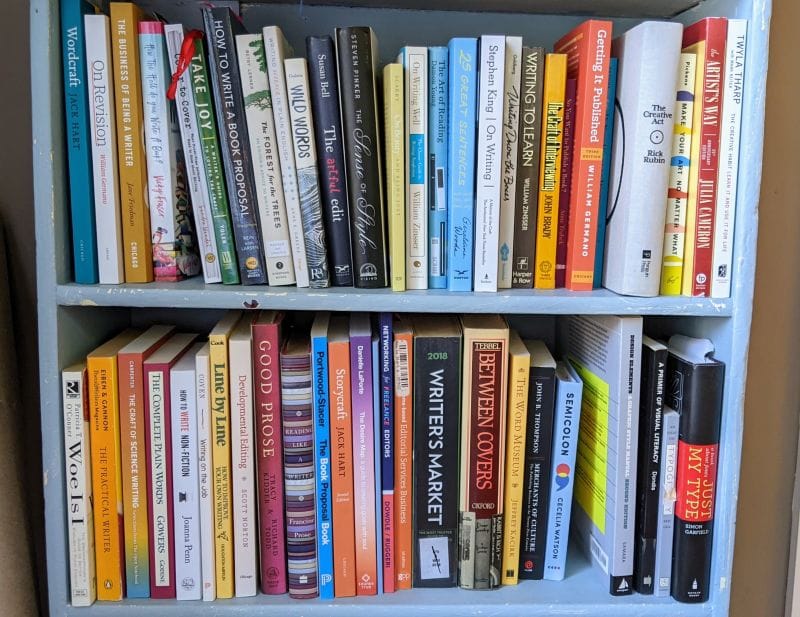
I had a bookshelf full of Robert McKee, John Truby, K.M. Weiland and Jordan Rosenfeld–every craft book I could get my hands on. I binged literary agent podcasts and interviews like they were audiobooks. I spent weekends watching Alexa Donne and Youtube video essays dissecting popular books and movies.
I am, after all, nothing if not a good student. Even snagged a Creative Writing degree from Princeton to boot.
I had already won writing awards.
I had multiple rounds of beta reads, and polished my 400 page manuscript until every person who read it told me I was ready.
It was, without a doubt, the best thing I had ever written.
I had been taught while working at Sterling that essentially getting an agent was a skill issue. A given as long as your novel was “blindingly good” polished, and projected to be profitable.
Something that was all but guaranteed if you put your nose to the grindstone, worked hard enough, and had a premise that was “marketable.”
Check, check, and check–with that last bit of criteria confirmed by Martha Milliard, a veteran fantasy agent at Sterling who had kindly heard my pitch for the novel before it was finished and told me it was one of the best she had ever heard.
I say this not to brag (if this was a movie here’s where the ominous background music would start playing). I say this to show you what’s happening to you is no accident, and you’re not alone.
I had connections and referrals from folks I had hobnobbed with at conferences and networking events. I even had an obvious “in” with my former literary agency.
And yet…

Crickets. Static. Silence.
Out of over 100 queries, I received only 5 full manuscript requests. 4 of those ended in polite rejections that stung all the more for their vagueness:
📩 “This is a hard sell in today’s market.”
📩 “I loved the concept, but I'm being selective with my list.”
📩 “There's much to admire here, but I'll have to step aside.”
And the last was an R&R from a very successful Writer’s House agent who essentially wanted me to write a brand new novel…
One with, you know, different characters, and an entirely different mythology, and a different magic system, and basically erased everything that was North African inspired in my North African inspired fantasy.
Naturally.
Oh, and the real kicker? Sterling Lord Literistic? The same agency that had told me I was a natural, a star, and I had the chops to be a senior agent one day?
They never even bothered to respond to my query.
SIDENOTE:
To be clear, I wasn’t expecting an offer of representation just because I had worked at Sterling. Of course not. But while I was assisting there, I was responsible for the slushpile and agent inboxes, and I saw several queries come in from former interns or employees. Every one of them–non-diverse authors–was read regardless. Every one of them received the courtesy of a full request and a personalized response. Every one except mine. I’ll let you take from that what you will.
The sum of every rejection I received:
Books like yours don’t sell...
OR
I couldn’t connect (to this all black kingdom with Kush-inspired gods and a gay king that tackles themes of colonialism and slavery? Really? Shocker.)
To be clear: this is not to whine. I’ve long since stopped looking to industry gatekeepers to validate my worth.
But at the time? It felt like a bitch slap to the face.
If you don’t think black fantasy novels could sell, ain’t much I can do to relieve you of that kind of racism.
But “I couldn’t connect” sounds like a “my book problem.”
And what’s worse? I had no idea why.
I didn’t realize that the key was lying in the wording of the rejection itself:
"I loved the writing, but I didn't connect enough to offer representation."
Sound familiar?
Like me, this probably had you ready to pull out a clump of hair the size of your fist.
How do you love something and still say no? It feels like two things that shouldn't go together — so most authors quietly decide the agent was being polite, or unsure, or maybe they have no fucking idea what they’re talking about.
But the thing is…
They weren't being unclear. They were being exact.
This is actually the most useful rejection you could ever receive, IF you know how to decode it.
They're describing two separate mechanisms in your manuscript — and telling you in no uncertain terms that one of them is already working…

“Good isn’t enough.”
I remember sitting across the desk from Martha, and I needed to make a good impression, especially now, at my first official sit down with the senior agent.
Martha was sharp as a butcher’s blade, blunt to a fault, a grizzled 20+ year veteran, and one of the best in the business. She didn’t need to know that I was resisting the urge to squirm as a drop of sweat trickled down my back. I swallowed, my face burning.
It was my job to go through the slushpile–I was essentially the first line of defense for the senior agents. Anything that was a clear no–purple prose, stories that opened with the character waking up and starting their day, amateurish query letters–I sent back a form rejection.
The manuscripts with potential, I’d ask for the partial or full, read it first, and either send a rejection or, if I thought it was actually worth considering for an offer of representation, I’d write a long-form review advocating for why this book was one worth taking a chance on, like a lawyer pleading their case in court.
All this before the agent the author was actually querying would even read the book. And like a court, the judge’s decisions were typically firm, swift, and final. At least they were when Martha was involved.
She’d called me in to discuss a manuscript I really liked: A speculative dystopian YA with a great hook. She said no. I asked her to reconsider. Rather than answering me, she called me into her office with that I-take-no-bullshit tone she had that would make a 4-star general quiver.
When she said what she said, I was baffled. I had always been under the impression the manuscripts who got rejected just weren’t very well-written, those authors that needed to work on their craft or whose novels were impossible sells. But this novel had everything–high concept premise, uber-marketable hook, the type of cinematic world I could see on the silver screen, and impeccable prose, pacing, character development–the works.
And yet, she didn’t want it.
Instead, she told me a story about another author she had signed. He was a short story writer from the Virgin Islands, and she had happened to come across one of his pieces. He was a complete unknown. No marketing hype. No platform. No connections.
It was a slow, literary story about identity and grief. Not super hook-y or with the potential to go viral.
But his story stirred something deep inside her. It got under her skin. She found herself running over it in her head as she drank her morning coffee, in the quiet moments between reading client manuscripts. It had grabbed her and just wouldn’t let her go.
So she had her assistant hunt this man down and flew to meet him at a tiny reading in the middle-of-nowhere in order to offer him representation.
Even though literary novels were supposedly dead.
Even though it was a “hard sell.”
Even though there were other stories that were technically perfect sitting on her desk.
He got signed.
As an author of color.
And he didn’t even have to try.
In the end, one quote echoed in my mind like the peal of a bell. From Chloe Gong’s How I Got My Agent story—an Asian-American author writing an Shanghai-inspired gangland YA romantasy (before that was really a thing) who received 2 offers of representation in under 30 days:
“Agents aren’t looking for perfection, they’re looking for heart.”
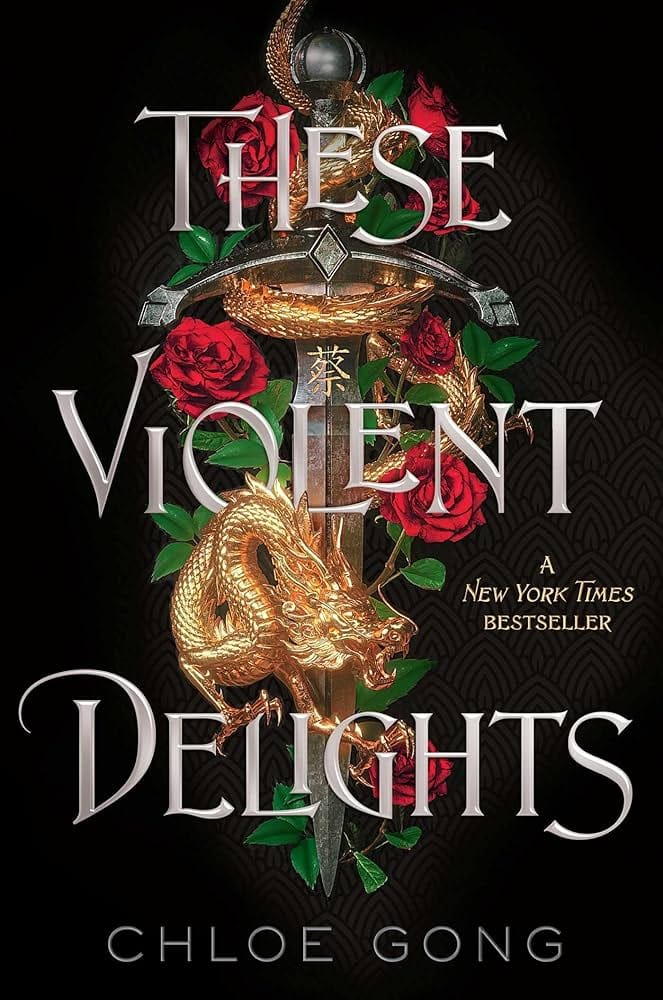
She’s very transparent about how neither her manuscript nor her query were perfect. How she broke some of the “rules.” Made some mistakes.
And this tracks with what I saw with my own eyes.
Literary agents passing on novels that were “perfect…”
In favor of taking on authors whose novels were a bit of a hot mess and needed 2 years of editorial work before being ready for submission.
Why?
Because, if I can paraphrase Gong:
Agents aren’t looking for perfection, they’re craving connection.
And connection is not created through mastering craft.
The problem is you’ve been taught that the latter begets the former. When they are actually entirely separate skills.
Senior Agent Rachel Gardner puts this into words better than I ever could:

“Craft refers to all the mechanics of fiction: plot, characterization, dialogue, pacing, flow, scene-crafting, dramatic structure, point-of-view, etc.
Story refers to the page-turning factor: how compelling is your story, how unique or original, does it connect with the reader, is there that certain spark that makes it jump off the page? Is it sufficiently suspenseful or romantic? Is the author’s voice distinct and compelling? It’s much harder to quantify than craft, and harder to teach.
Of course, the two elements are intertwined, but it’s helpful to artificially separate them, in order to understand why a book is either working—or not.
Lately I’ve noticed amongst my stacks of rejected queries an increasing number of projects that show strong technique, but no originality or heart.”
There’s that word again: heart.
Heart is something that can’t be quantified. But it’s felt.
Agents and acquisitions teams consult the data, yes. They look at market dynamics, of course. But at the end of the day, offers of representation and debut book deals are offered to manuscripts that make agents feel something.
Story is not the afterthought, the second consequence of doing craft well. Story IS the only thing that matters.
As Lisa Cron says in her amazing book on writing, Story Genius: “That’s why when it comes to effective writing, story is the only nonnegotiable. Everything else is gravy. To be clear, I’m not saying that learning to write well isn’t a good idea. It is. But of the two, only story is essential” (p. 20).
The game we should be playing is not to be twice as good at craft, but twice as good at capital S Story. To have a manuscript with an exceptional, extraordinary amount of heart.
A manuscript that compels agents to turn the pages and take them on an emotional rollercoaster that leaves them wide-eyed and breathless by the time they reach The End.
And your current revision techniques—your line editing and polishing, tweaking and trimming, is actually carving out the raw, pumping heart of your story, leaving behind a manuscript that, to the agent, just feels empty. A little bit…lifeless.
Not only is craft not creating the connection agents crave…
It’s actually killing it.
The reason why is something you’ve never been taught.
And if you don’t learn to stem the connection hemorrhage, you can kiss your chances of a debut book deal goodbye…
SUBTEXT
1. Pretty prose and perfect pacing isn't what creates obsession. Otherwise everyone's favorite book would be The Iliad
2. Craft and Story are very different things—the former gets you respect, the latter gets you representation
3. Craft isn't only preventing you from creating connection, it's actually sabotaging it