PART 4 (Of 5)
The "I Didn't Connect" Conspiracy (Part 2)
HERE'S WHAT WE KNOW
1. Agents aren’t looking for perfection, they’re seeking connection
2. Agents reject novels when they feel distant from the manuscript, and therefore don’t feel anything while reading it
3. Narrative Distance is always a deficit of character. Plot is only relevant, it only matters, it's only effective, dependent upon our relationship with the character. If your full requests are getting rejected, you have a character problem above all else.
4. As diverse authors agents will automatically struggle to connect to our characters—no matter how masterful the writing (we'll dive deeper on why and how to overcome this in the next couple pages)
“We question all of our beliefs, except for the ones we really believe in, and those we never think to question.” –Orson Scott Card
The publishing industry has a dirty little secret.
There is something happening in the mind of every literary agent who reads an OwnVoices manuscript that she will never put in a rejection letter. That she probably couldn't articulate even if she wanted to. And it is the single biggest reason you don't have an offer yet.
We’ve established that Narrative Distance is the full request killer — but for marginalized authors there's a second layer underneath it that makes the problem twice as hard to fix.
There is a subconscious psychological wiring that makes it immeasurably harder for agents to bond with diverse protagonists than non-diverse protagonists — and most agents aren't even aware it's happening.
There’s a little phenomenon called Implicit Bias, and it’s a major reason why typical character and craft advice doesn’t work for diverse authors.
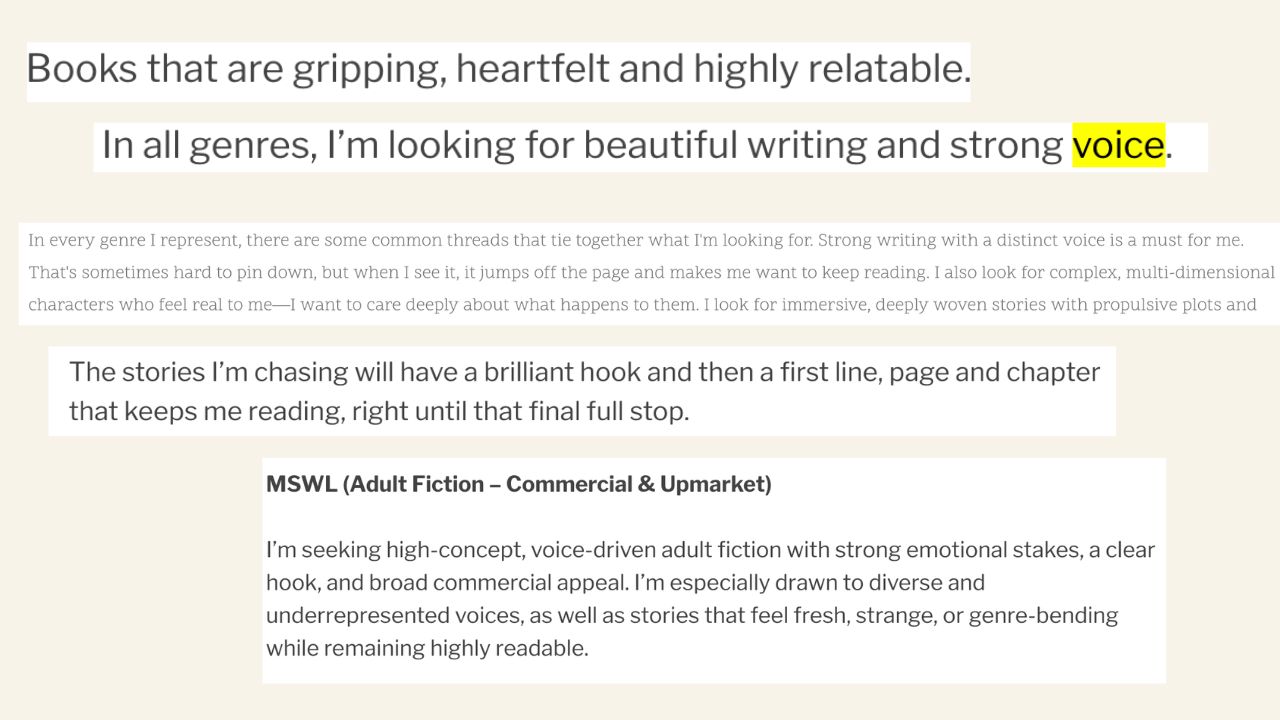
There’s this commonly doled out advice that the way to get a reader to connect with your character is to make them three-dimensional, relatable and realistic.
To give them quirks, flaws, a strong Voice all in the hopes of getting your reader, in this case, a literary agent, to identify with the character, and therefore feel an attachment to them.
Literary agents will even tell you this, at publishing conferences and agent panels and on Manuscript Wishlists:
Under normal circumstances this is pretty good advice, and, in the hands of a talented writer, it will work.
But being diverse throws a big fat wrench into this philosophy.
It’s not exactly a secret that most literary agents are cis, heterosexual, white women. The big shot executives running the agencies and publishing companies tend to be a disproportionate amount of cis, heterosexual white men.
Let’s not touch that causal workplace misogyny—it’s a story for another time.
You see, we as people are wired to connect to people like us. People in our “in-group.” It’s why you have a better relationship to the coworker two cubicles down who’s a fellow Dolphins fan, it’s why you’ll bond with a stranger in the Starbucks line who has the same love for 80s classic rock, and it’s why most people have friendship circles full of people who are of the same race, culture, ethnicity or background as them.
Moreover, we hold subconscious beliefs about people outside of our in-group. And you betcha, this is what we call (capitalized for emphasis) Implicit Bias. I like PBS’ short and sweet definition: “Implicit biases are thought processes that happen without you even knowing it. Little mental shortcuts that hold judgements you might not [consciously] agree with” (highlighted word added by me).
Everybody has Implicit Biases. Just like the characters we write, we all hold expectations, assumptions and worldviews that create a lens through which we view and judge capital I Issues, the world, and, most importantly, other people.
Whether it’s a belief that tea drinkers are a bit childish and weak, a thought that people who love gangsta rap are less moral and intelligent than those who love Classical, or an assumption that the only people who would read a black, sapphic romance novel are those who are black and sapphic, or looking for “diverse books” (this is something a literary agent told me straight up, just last year).
Combine these two psychological truths and OwnVoices authors have a fucking big problem on their hands.
Because when your neurodivergent, South Asian, nonbinary immigrant character comes across the desk of Jessica–white, cis-gender mom of 3 who grew up in Stanford, CT and has never actually met a nonbinary person before–there is an instant, unconscious, but cavernous gap between her and your protagonist.
This is The Identity Gap.
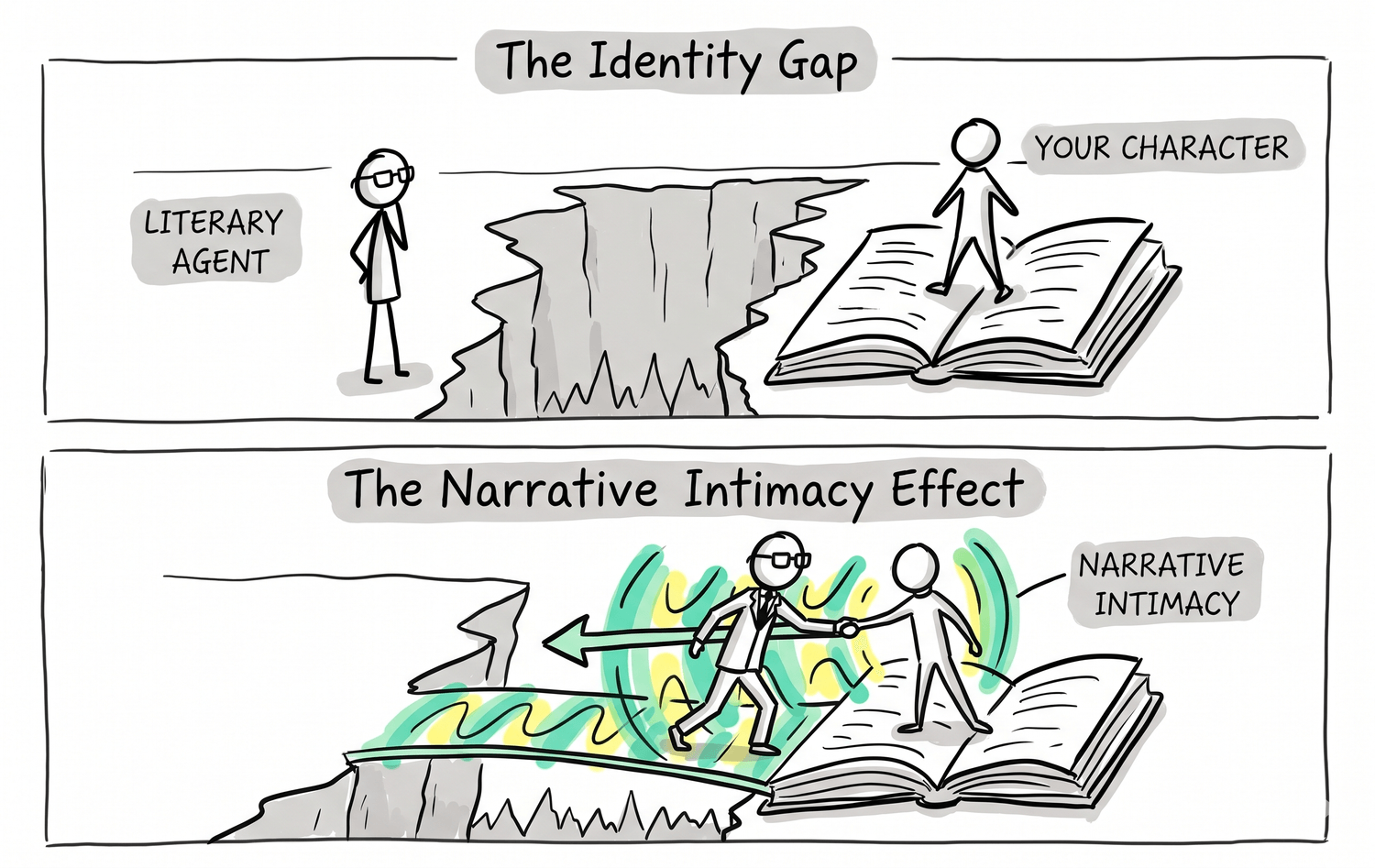
And 9 times out of 10 it won’t matter how well-developed, quirky and three-dimensional your character is. Jessica cannot relate to them. Their life and identity is so far outside of what Jessica herself has experienced and known, that there will be this intangible disconnect.
I want to emphasize, I do not believe literary agents and acquisitions teams do this on purpose.
It’s a psychological phenomenon that runs on autopilot, deep under the surface of their conscious minds. This isn’t even a publishing industry specific problem. This is a human problem, but one that ultimately has far-reaching consequences for diverse novels.
SIDENOTE: While literary agents and acquisitions teams didn’t invent Implicit Bias, I do believe it is their job, and the job for the traditional publishing industry as a whole, to acknowledge, excavate and dismantle their Implicit Bias. It’s not enough to say you want more marginalized authors or admit publishing is biased. If you’re not doing the work—to be actively anti-racist, anti-homophobic, anti-transphobic, anti-ablelist—you are still part of the problem. Organizations like We Need Diverse Books are out here doing the Lord’s work, but the onus shouldn’t be on marginalized authors and agents to push things forward. The Jessica’s of publishing should be doing just as much for the cause.
At the end of the day, what causes an agent to connect to a character isn’t relatability in and of itself. It’s empathy.
Or, as Richard Powers says in the 2019 Pulitzer Prize winner, The Overstory, “...people see better what looks like them.”
We feel connected to characters, and people when we feel like we’ve walked a mile in their shoes. When we identify with them.
And due to Implicit Bias, this is an extraordinarily difficult feat for literary agents to do with OwnVoices novels (at least when we’re relying on craft alone).
They can like your character. They can think they’re funny. They can admire them. But they won’t bond with them.
Why? Because they can sympathize but not empathize.
And empathy is a pre-requisite for identification.
Let’s go all Merriam-Webster for a minute…
Empathy: “the action of understanding, being aware of, being sensitive to, and vicariously experiencing the feelings, thoughts, and experience of another.”
Read that definition again. I’ll wait.
.
.
.
This alone hands you the veritable keys to the castle. When you really internalize this, it is an earth-shaking, doors-opening, spine-chilling insight of epic proportions.
Hint: there’s a couple more of those on this page, hiding in plain sight.
I’ll break down exactly what I mean on the next page.
But needless to say when I truly got this, it changed everything for me.
I revised my YA epic fantasy with one goal: to compel agents to empathize, even if my character was nothing like them. Even if the novel was like nothing they’d ever seen before.
I was ruthless about revising for this and only this.
It was the same plot. The same characters. The same ending. The same twists.
And I did something most folks would tell you to never do–I queried the same book again.
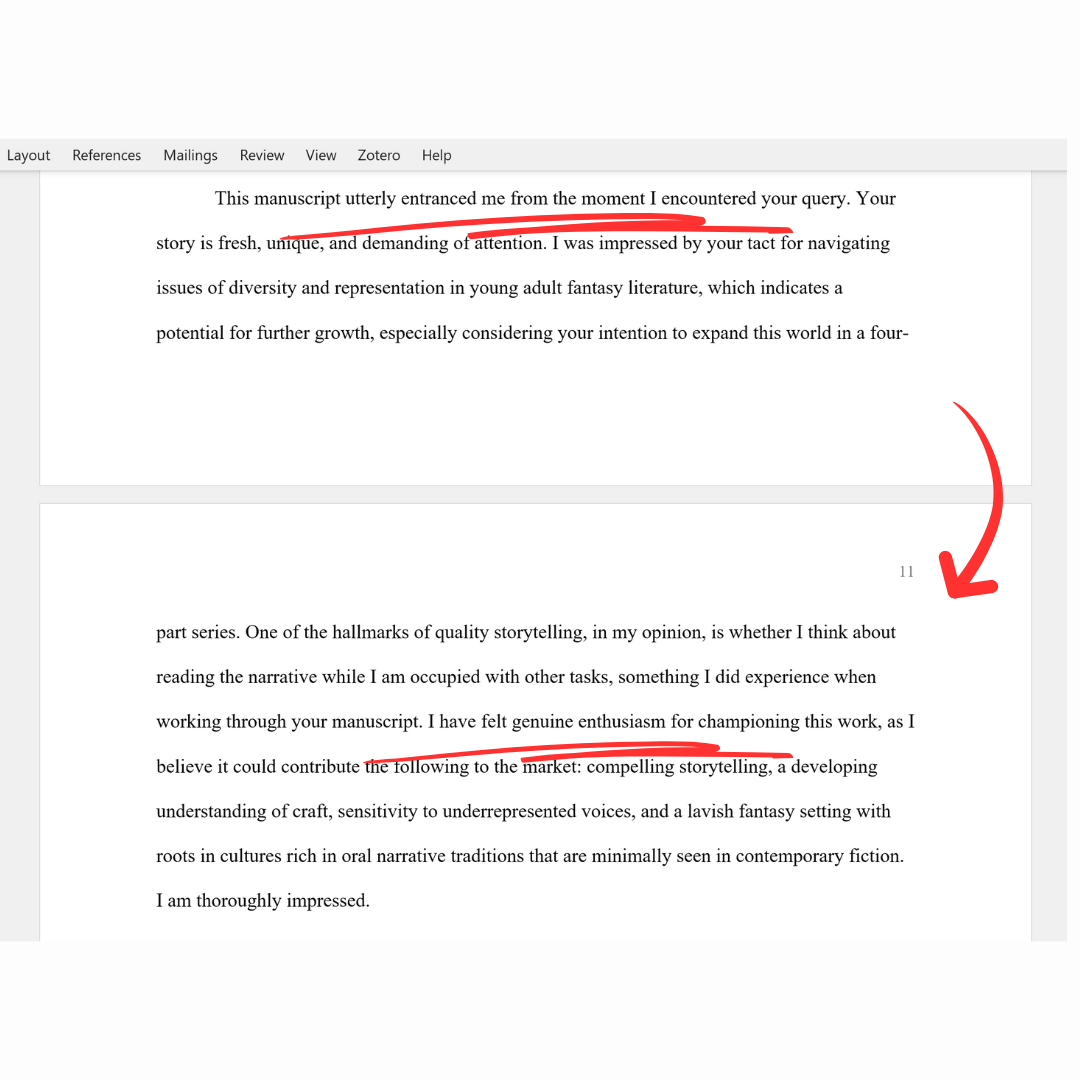
And this time around received 32 manuscript requests out of 93 queries in just 7 weeks, and Marisa Corvisiero Literary sent me this:
So let’s cut the sad violin music because not all is lost.
As I said before, what you’ve been experiencing is the result of playing the wrong game. The “master your craft” game.
But what if I told you there was another way?
Drumroll please.
Because the secret to overcoming the Identity Gap is…
Coming to your email tomorrow.
SUBTEXT
1. Typical character advice does not work for diverse authors writing diverse manuscripts—this is why the character creation sheet you filled out
2. Agents can't empathize with characters who are far removed from their own personal experience
3. Empathy then, must be intentionally engineered, the manuscript written in such a way that The Identity Gap collapses (hint, hint)
Want to keep reading?
This next part is proprietary intellectual property. Which is a fancy way of saying it's my top-secret, mind-blowing brain baby, and I only want it in the right hands. If what you've read so far has resonated with you, put in your name and email below and I'll email you the rest of the series.
We HATE spam. Your email address is 100% secure and I will literally only email you to give you more cool shit like this article series. Unsubscribe anytime. I won't cry (maybe a little).